What Is Phantom Power, and How Much Does It Cost?
Phantom power is electricity devices use while switched off or on standby. The US DOE puts it at almost 10 percent of home electricity use. How to find and cut it.
Skip the arithmetic. Enter your own appliances, usage and prices and the calculator does the sums.
Open the Energy Savings CalculatorPhantom power, also called standby power or a phantom load, is the electricity devices use while they look switched off or are waiting to be used. The US Department of Energy says it makes up almost 10 percent of home electricity use.
Where it comes from
Many devices keep part of their electronics running so they can respond to a remote, keep a clock, stay connected to a network or start up quickly. Common examples:
- TVs, set-top boxes and games consoles in an “instant-on” mode
- Computers and monitors in sleep mode
- Chargers and power adapters left plugged in
- Microwaves, coffee makers and other appliances with clocks or displays
- Smart speakers and other always-connected devices
How much it costs
Each device draws only a little, but standby power runs every hour of the year. That is 8,760 hours.
kWh a year = standby watts × 8,760 ÷ 1,000
Example: if all the standby devices in a home add up to 50 watts, that is 50 × 8,760 ÷ 1,000 = 438 kWh a year. At an example price of $0.17 per kWh, that is about $74.46 a year.
Homes vary a lot. In a Lawrence Berkeley National Laboratory study that measured ten California homes, standby power ranged from 5 to 26 percent of each home’s yearly electricity use.
Find it in your home
- Plug-in energy monitor. Put it between a device and the socket and switch the device off. The monitor shows what it still draws.
- Your meter. At night, with lights and big appliances off, read your electricity meter or your utility’s app over an hour. What is still being used is mostly standby and appliances like the fridge.
- Smart plugs with energy readings. Leave one on a TV or computer setup for a week to see its standby use.
Cut it
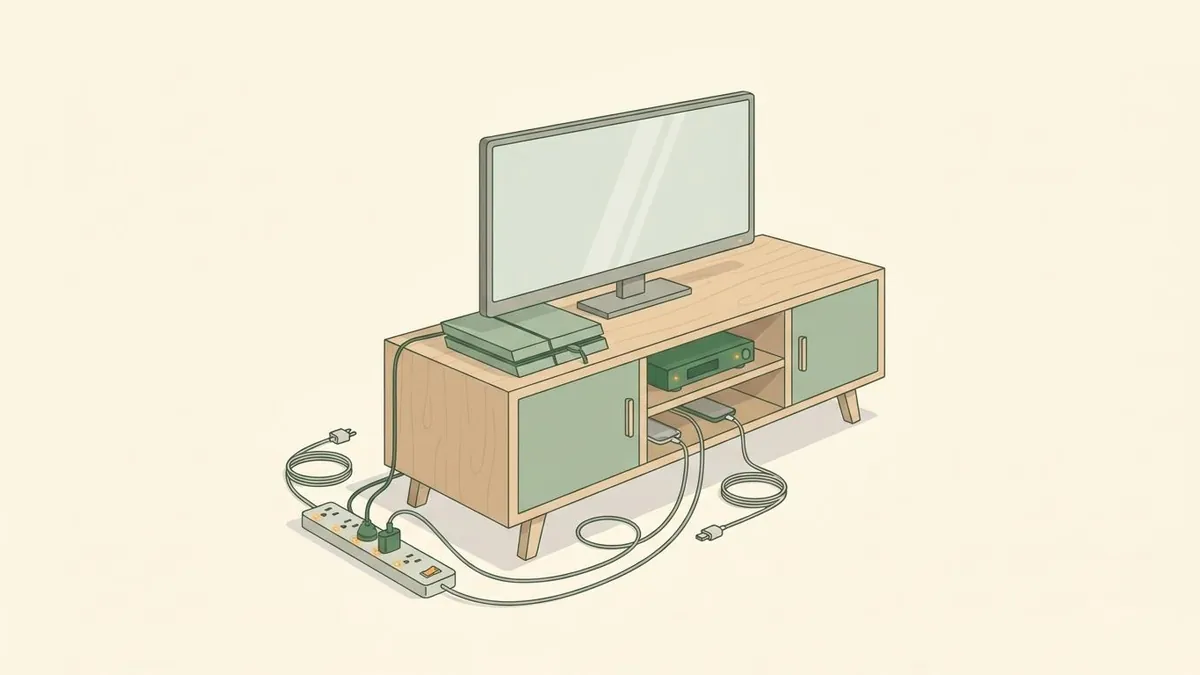
- Plug groups of devices, such as a TV setup, into a switched power strip and turn it off at night.
- Turn off “instant-on” or “quick start” modes on TVs and consoles. Check the device’s power or energy settings.
- Unplug chargers and devices you rarely use.
- Use a timer or a smart plug for setups you always forget.
- When you replace a device, check its standby power in the specifications. ENERGY STAR certified products often have lower standby limits.
Leave alone anything that must stay on, such as a fridge, freezer, medical equipment, alarm systems, and routers if you need them.
Estimate the saving
Measure the standby watts you can cut, work out the kWh a year with the formula above, and put it into the energy savings calculator. For when a smart plug is worth adding, see do smart plugs save energy.
Sources
- US Department of Energy: Test your Home Energy IQ
- Lawrence Berkeley National Laboratory: field measurements of standby power in ten homes
Skip the arithmetic. Enter your own appliances, usage and prices and the calculator does the sums.
Open the Energy Savings CalculatorMonthly home energy tips
One email a month with our new guides, a free calculator to try and the latest electricity prices. Unsubscribe any time.
The signup form is provided by Hostinger Reach and loads when you click. You confirm by email before you get anything. Privacy policy.
Related guides
Energy & Solar
How Long Will a Portable Power Station Run a Refrigerator?
Divide the usable watt-hours by the fridge's average watts. A 1,000 Wh power station runs a 400 kWh-a-year fridge for about 18 hours. Worked…
Energy & Solar
LED vs Incandescent Bulbs: How Much Do You Save?
A 9-watt LED gives about the same light as a 60-watt incandescent. Used 3 hours a day, the LED saves about 56 kWh a…
Energy & Solar
Electricity Cost by State in 2026: What Appliances Cost to Run
US homes paid 18.19 cents per kWh on average from January to August 2026, from 12.46 cents in North Dakota to 46.41 cents in…